
Quartz vs Granite: Which Worktop Is Best for Your Kitchen?
Choosing the perfect kitchen worktop means weighing style, durability and upkeep. Quartz worktops and granite worktops both bring unique benefits—but which suits your project best? In this guide, you’ll find clear comparisons on performance, maintenance and cost to help you decide with confidence. When you’re ready, Medusa Stone Essex offers expert templating, in-house fabrication and installation to bring your vision to life. Book a showroom visit in Essex to view 100+ slabs and get a no-obligation quote tailored to your plans.
Performance Comparison
When it comes to performance, both quartz and granite have distinct characteristics that cater to different needs. Let’s delve into these aspects to help you make an informed choice.
Durability and Resilience
Quartz is an engineered stone, known for its sturdiness. It comprises around 90% crushed quartz mixed with resins and pigments. This composition makes it resistant to chips and cracks. Granite, on the other hand, is a natural stone formed from cooled magma. Its natural formation process contributes to its strength, making it one of the hardest materials available for kitchen surfaces.
While both materials are robust, granite edges out with its natural resilience. However, quartz offers consistency in its pattern and colour due to its engineered nature. If you’re looking for a worktop that can endure daily kitchen activities, both materials are up to the task, but granite may handle heavy impacts slightly better due to its natural hardness.
Heat and Stain Resistance
A common concern for kitchen worktops is how they stand up to heat and stains. Granite can withstand high temperatures, making it suitable for handling hot pots and pans directly. However, it’s always advised to use a trivet to avoid any potential damage over time. Quartz, though not as heat-resistant, is less porous than granite. This means it has superior resistance to staining and doesn’t require sealing.
If you frequently cook and deal with hot cookware, granite might be your go-to. However, if staining from spills is a bigger worry, quartz’s low porosity could save you from future headaches. Remember, regular cleaning and care can enhance the lifespan of your worktop, regardless of the material chosen.
Style and Aesthetics
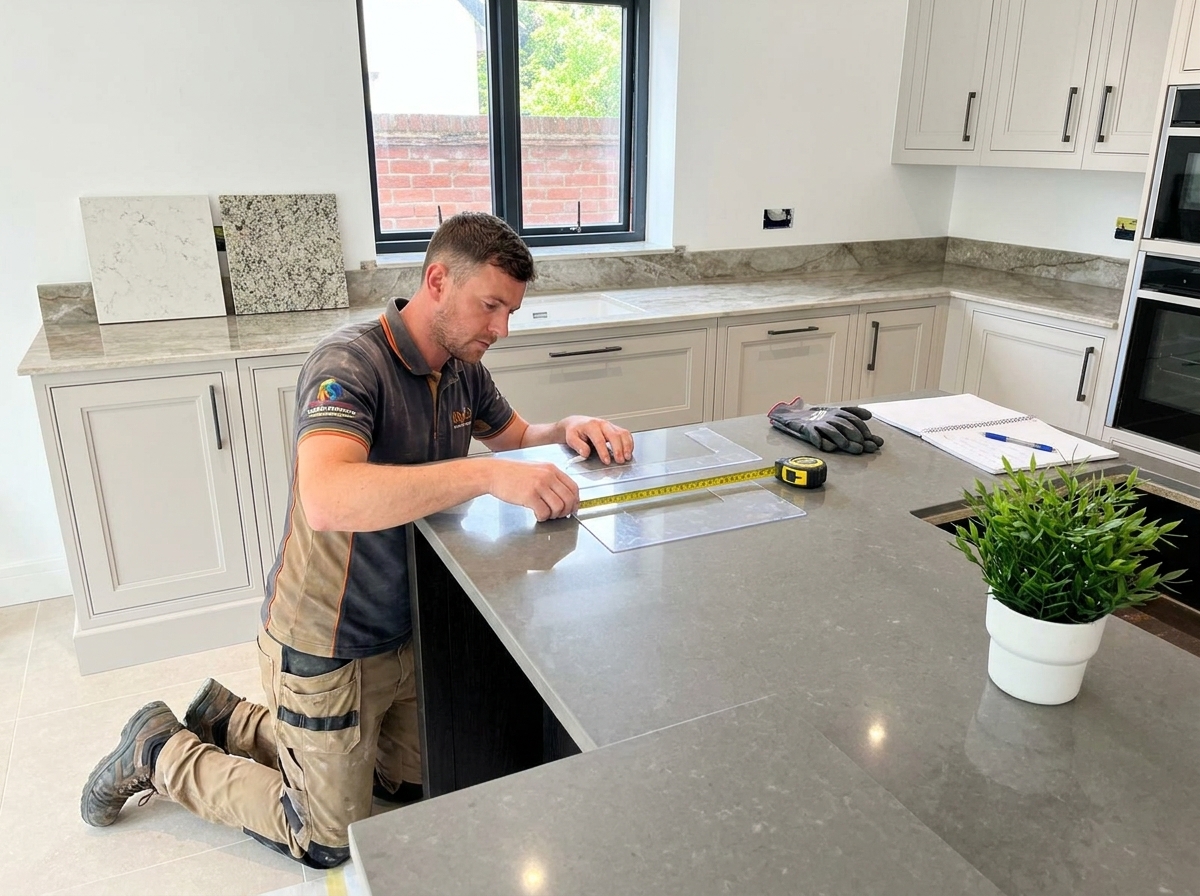
Beyond performance, the look of your worktop plays a crucial role in defining your kitchen’s overall aesthetic. Let’s explore the visual appeal of these materials.
Colour and Pattern Options
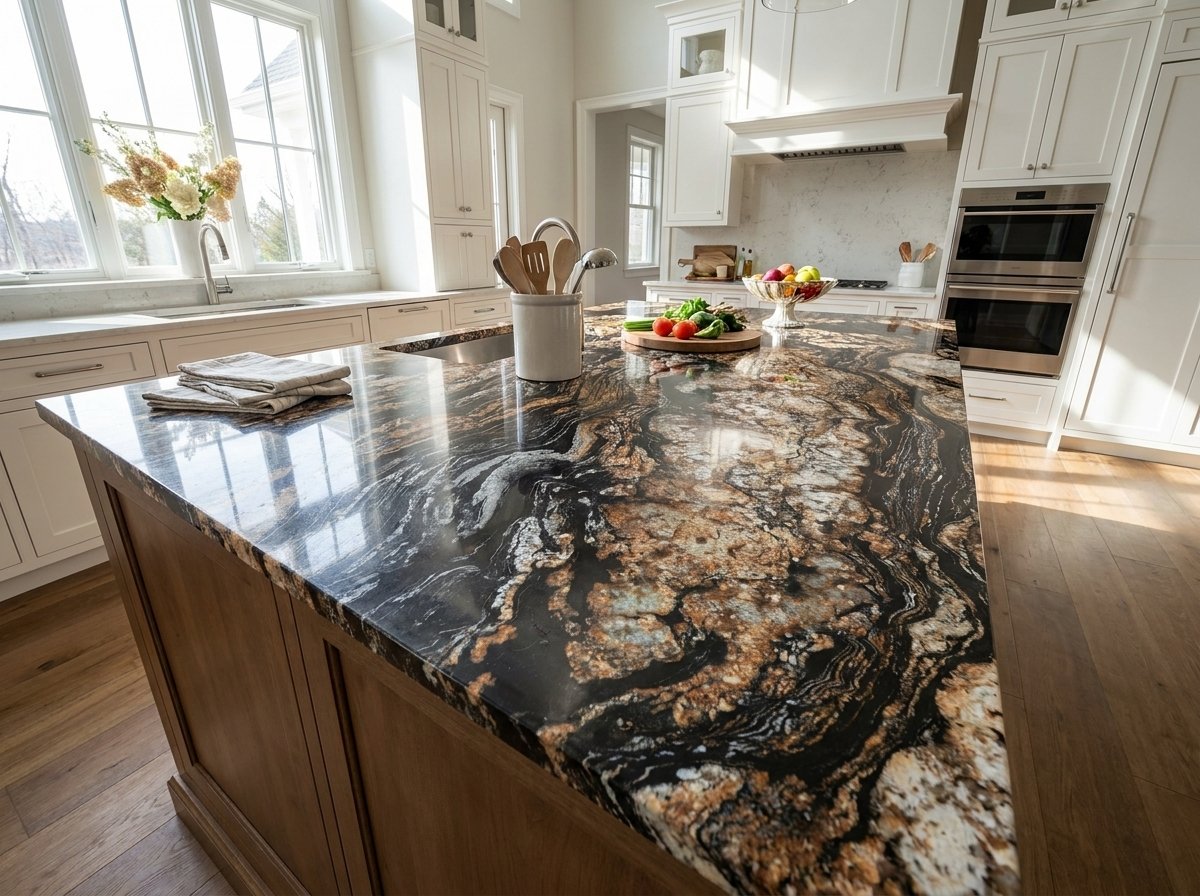
Quartz offers a wide range of colour options, from solid colours to those mimicking natural stone like marble. Its consistency in pattern makes it a popular choice for those seeking a uniform look. Granite, with its natural origins, provides unique patterns and a variety of colours that can’t be replicated. Each slab is distinct, providing a one-of-a-kind look.
For those who want a specific hue or a consistent look throughout, quartz is a fantastic choice. However, if you prefer a more natural appearance with unique patterns and a touch of elegance, granite might be more appealing.
Fit for Kitchen Styles
Both quartz and granite can fit seamlessly into various kitchen styles, whether modern, traditional, or transitional. Quartz is often favoured in minimalist and contemporary kitchens due to its sleek and uniform appearance. Granite, with its natural charm, complements rustic and classic designs beautifully.
Consider the overall theme of your kitchen. For a sleek and modern vibe, quartz can enhance the clean lines and simplicity. For a more natural and earthy feel, granite can add warmth and texture, making your kitchen feel inviting.
Maintenance and Cost
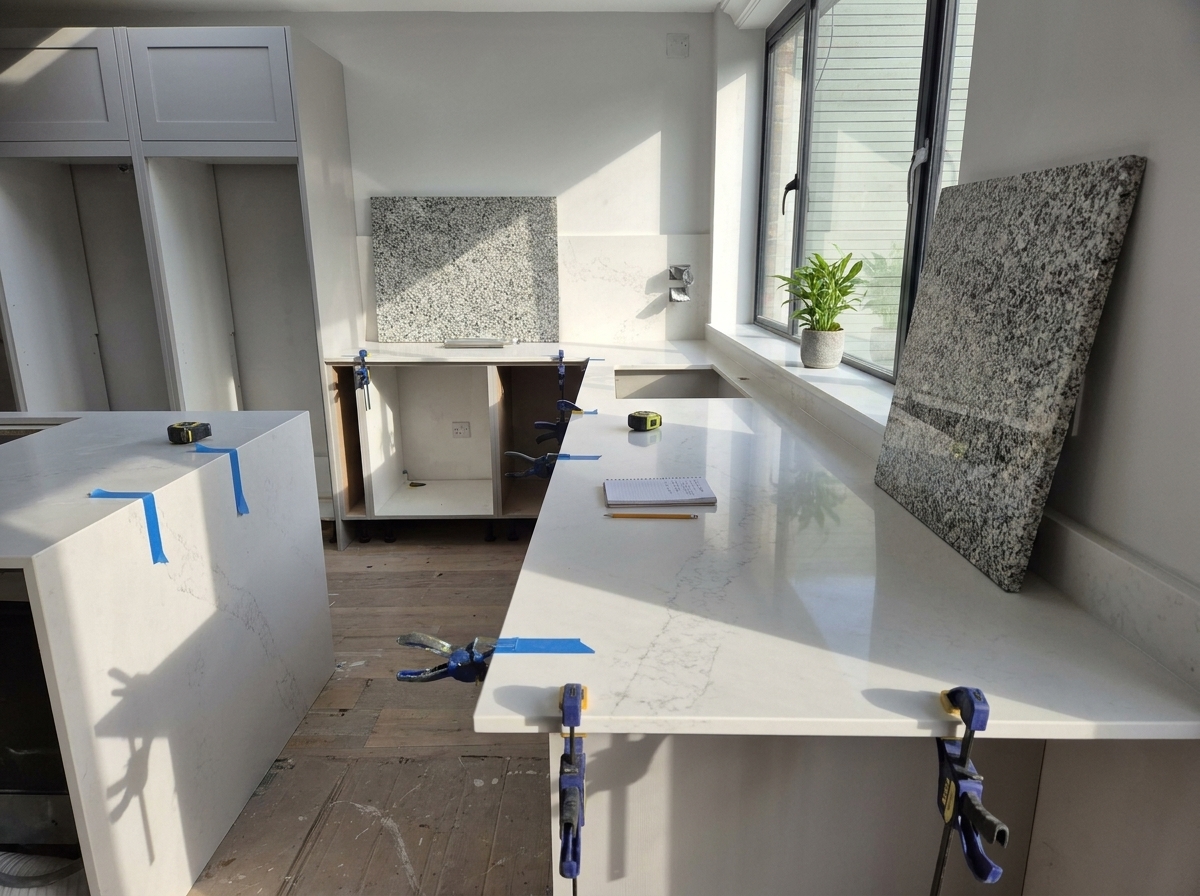
The practical aspects of maintenance and cost are essential when choosing your worktop material. Here’s what you need to know.
Cleaning and Upkeep
Quartz is known for its low maintenance. It doesn’t require sealing, thanks to its non-porous surface. A simple wipe with warm soapy water is usually enough to keep it clean. Granite, while durable, does require periodic sealing to maintain its resistance to stains and moisture. Regular cleaning with a stone-specific cleaner can keep your granite worktop looking pristine.
If ease of upkeep is a priority, quartz is the way to go. However, if you’re willing to invest a bit more effort into maintaining your worktop, granite’s timeless beauty could be worth it.
Budget Considerations
Cost is always a factor in home renovations. Quartz and granite are generally in a similar price range. Factors such as colour, pattern, and thickness can influence the overall cost. Granite might have a slight edge in terms of affordability, depending on the rarity and source of the stone.
When budgeting, consider the long-term investment. Both materials add value to your home, but your choice might ultimately depend on your style preference and willingness to maintain the worktop.
In conclusion, whether you lean towards the uniformity and ease of quartz or the unique elegance of granite, both materials offer durability and style. Consider your priorities in terms of maintenance, visual appeal, and cost to make the best decision for your kitchen project.
Reflect on this year’s achievements and start planning your dream kitchen with us next year.



About Post Author

